
House Key Duplication Near You: Prices and Key Types

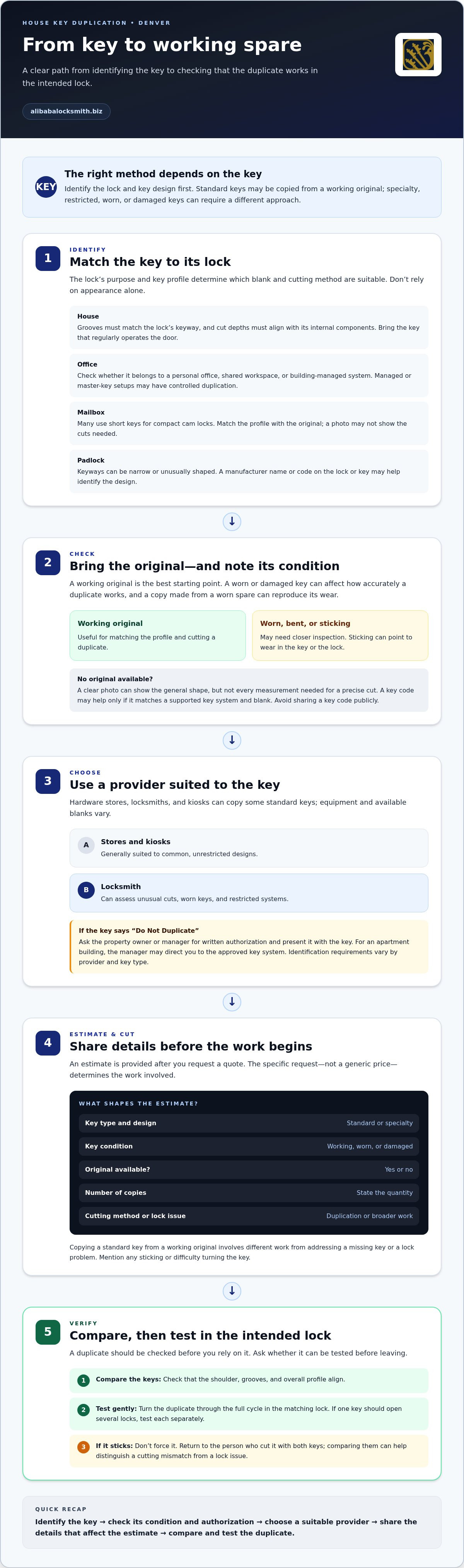
A spare key is a simple way to reduce the risk of being locked out. If you're searching for house key duplication near me in Denver, a standard house key can often be copied from a working original, while specialty designs may require a different approach. The right option depends on the key’s type and condition.
Before arranging a copy, it helps to know what affects the process. This guide covers house, office, mailbox, and padlock keys, factors that can affect duplication, and what information helps determine an estimate.
The price depends on the key type, its condition, and the number of copies. A quote is provided after you describe the request. You’ll also learn when a spare key is a practical solution and when a locksmith can help with a broader lock or key issue.
Table of Contents
House key duplication
A working house key can provide a practical spare for a family member, tenant, or trusted neighbor. When searching for house key duplication near me, identify the key type and whether you have its original before choosing how to get a copy.
Choosing a Duplication Provider
Hardware stores, locksmiths, and kiosks can copy some standard house keys, but their equipment and key selection vary. Stores and kiosks generally suit common, unrestricted designs; a locksmith can assess unusual cuts, worn keys, and restricted systems. The right fit depends on the key, not simply the distance from home. Bring the original and compare its profile with the available blanks before cutting.
Ownership Verification
Identification requirements vary by provider and key type. A standard key may be copied from the original without proof of ownership, while a restricted key may require authorization. Bring photo identification and, if you rent or manage the property, written permission from the owner or property manager. These details can help establish who is authorized to request a copy.
Duplication Turnaround
Copying a standard key from a usable original is generally simpler than duplicating a specialty key or one with damaged cuts. The process involves matching a blank, cutting it to follow the original, and checking that the duplicate turns the lock. Ask whether it can be tested before you leave. An unusual profile, unavailable blank, or worn original can add steps.
If your key says “Do Not Duplicate,” don’t treat the wording as permission to ignore a restriction. Ask the property owner or manager for written authorization, then present it with the key to the locksmith handling the request. For an apartment building, the manager may direct you to the approved key system.
A clear photo can help identify a key’s general shape, but it won’t show every measurement needed for a precise cut. A key code may work if it matches a supported key system and blank. Provide the code and any available key-system details so the locksmith can determine the right cutting method. Avoid sharing a key code publicly, as it could help someone make a copy.
Before leaving, compare the new key with the original. Check that the shoulder, grooves, and overall profile align, then test the duplicate in the intended lock. If it sticks or won’t turn smoothly, don’t force it; return to the person who cut it with both keys. Comparing them can help distinguish a cutting mismatch from a lock issue.
House, office, mailbox, and padlock key duplication
The key’s shape and the lock’s purpose determine which blank and cutting method are suitable. A house deadbolt, office lever lock, mailbox cam lock, and padlock can each use a different key profile. Identify the lock first, then match the key to its specific design rather than relying on appearance alone.
House keys: A common house key has a flat blade with grooves along one or both sides. The grooves must match the lock’s keyway, and the cut depths must align with its internal components. Bring the key that regularly operates the door. A copy made from a worn spare can reproduce its wear and cause sticking.
Office keys: An office key may open one door or belong to a managed system covering several doors. A key marked for a particular suite or master-key setup may have controlled duplication. Before requesting a copy, identify whether it belongs to a personal office, shared workspace, or building-managed system. Follow the property manager’s authorization process for managed keys.
Mailbox keys: Many mailbox locks use short keys designed for compact cam locks. The key may differ from a house key, even if both have flat metal blades. Use the original mailbox key to match the profile, and label the copy separately from keys that access your home. A photo alone may not show the cuts needed to duplicate a missing mailbox key.
Padlock keys: Padlocks can use distinct keyways, including narrow or unusually shaped profiles. Check the lock body and key head for a manufacturer name or code, then bring both the padlock and its working key when practical. The lock itself can help identify the correct blank. A bent key or one that works only at a certain angle may signal wear, not just a need for another copy.
For each key type, ask to test the copy in the matching lock before relying on it. Turn it gently through the full cycle; don’t force a key that binds. If one key must operate several locks, test each one separately. A duplicate that works in one door may not fit another, even when the locks look alike.
Keep restricted office keys with the person responsible for building access, and store spare mailbox or padlock keys securely. If a door key issue involves the lock itself, residential lock support can address the broader access problem.
Service pricing and estimates
A useful estimate starts with the exact key or lock issue, not a generic price. The key design, its condition, the number of copies, and whether the original is available all affect the work.
Service Pricing
The price depends on the specific request, and an estimate is provided after you request a quote. Key type, number of copies, condition, and cutting method all affect the estimate. Copying a standard key from a working original involves different work from addressing a missing key or lock problem. Share the relevant details so the estimate reflects the job.
A worn key may need closer inspection because its cuts might no longer represent the lock accurately. A restricted design may require authorization or a specific blank. If you need several copies, state the quantity together rather than requesting them separately. Clear details help distinguish straightforward duplication from work involving the lock itself.
Keep the original key available when possible, and describe any sticking or difficulty turning it. These symptoms can point to wear in the key or lock. A copy alone may not resolve a lock issue. If you’ve lost the last working key, restoring access or rekeying may be necessary instead of simply cutting a duplicate.
Cost Estimates
An estimate should make clear what work it covers, such as copying an existing key or addressing a lock-related problem. The key profile and condition, number of copies, and availability of the original all affect the work. Describe the lock and issue accurately when requesting a quote.
Before approving the work, compare the estimate with the task you described. If you requested copies for a front door and a side door, make sure both locks and the requested quantity are understood. Ask for the scope to distinguish key cutting from additional lock work. This keeps the estimate tied to the actual job.
A spare key can help prevent losing the only working key and needing a more involved lock service. If no original remains, explain that at the outset; the process may involve the lock or its key system. The number of locks affected can also influence the work. Replacing access across several doors, for example, differs from handling one lock.
For a clearer quote request, gather the working key if available, the number of copies you need, and a short description of each lock. Mention whether the key is worn, restricted, or difficult to turn. These details give the estimate a practical basis and help distinguish duplication from a broader access issue.
How long does it take to duplicate a house key?
There isn’t one fixed turnaround for every house key. A standard key with a usable original follows a simpler process than a worn, restricted, or unusual design.
The process involves identifying the keyway, selecting a matching blank, cutting the duplicate, and testing it. A common house key with clear grooves is easier to match than one with a less familiar profile. Each additional step can affect how long the job takes, especially if the right blank isn’t immediately available.
Bring the original key and describe the lock it operates. If it’s for a front-door deadbolt, say so; the lock type helps distinguish it from a mailbox or padlock. Mention whether the key turns smoothly, catches, or needs a particular angle. These details help determine whether it needs copying or has an existing wear problem.
Key condition: A bent or heavily worn key needs closer assessment than a clean, working original.
Key profile: An uncommon shape can require finding a specific blank before cutting begins.
Copy method: A key made from a code or lock may involve different preparation than one copied from an original.
Testing: Checking the duplicate in the intended lock adds an important final step.
If a duplicate is cut from a worn key, for example, it may reproduce the wear instead of matching the lock accurately. The locksmith may need to assess the original and choose another way to make the copy. A restricted key may also require authorization before cutting. Each condition can change the sequence, not just the cutting itself.
To make the visit more efficient, bring the working key, identify the door, and state how many copies you need. If the key is marked “Do Not Duplicate,” bring written permission from the property owner or manager. If no original remains, explain that before work starts; making a key from the lock or a code requires a different process.
After cutting, test the duplicate in the specific lock it’s meant to open. Turn it gently through the full cycle and check that it withdraws smoothly. If several doors use matching keys, test each lock separately. A copy that operates one lock may not work in another, even if the keys look alike.
These steps give a clearer picture of the work than a time estimate based on the words “house key” alone. The key’s condition, profile, source, and required checks shape the turnaround from start to finish.
Can locksmiths copy high-security or restricted house keys?
Yes, a locksmith can copy some high-security or restricted house keys when the key system permits duplication and the request is authorized. The design, control process, and available cutting method determine the next steps. A “Do Not Duplicate” stamp alone doesn’t explain the system’s requirements.
High-security keys are designed with features that differ from common house-key profiles. A key may have an unusual groove pattern or require a matching blank and compatible cutting equipment. A locksmith first identifies the keyway and any manufacturer or system markings. This helps determine whether the key can be duplicated through an authorized process.
Restricted keys add another layer: the key system may limit who can order blanks or approve copies. An apartment manager, for example, might control copies for a building’s shared entrances. A homeowner may need to provide authorization tied to the property or key system. Requirements vary, so bring the original key and any authorization documents you have.
Prepare for the visit with a few specific details:
Bring the original key, rather than relying on a photograph.
Note any maker name, key code, or restricted-use marking.
Bring written permission from the owner or property manager when applicable.
Explain which door the key opens and how many copies you need.
A key code can help identify a compatible profile, but it doesn’t automatically authorize a copy. A photo can show the general shape but may not capture the measurements needed for accurate cutting. If the original is worn, mention that before work begins, since its visible cuts may not be a reliable reference for the lock.
If you don’t have authorization, don’t try to bypass the system by filing the key or altering its markings. Contact the person responsible for the property, such as the homeowner or building manager, and request permission. If you rent, keep the approval with your records. This gives the locksmith a clear basis to assess the request.
After duplication, test the copy in the intended lock and check its full turn. A restricted key that operates one door may not fit another door in the same building. Keep the original and copy together for comparison, and report sticking immediately rather than forcing the key. For guidance with a restricted house-key issue, discuss your key concern.
Losing the last house key can lead to a locksmith charge of hundreds of dollars to rekey the locks. Keeping an authorized spare available can help avoid an urgent request to restore access across the property.
If the key system permits duplication, arrange a spare while the original is still available and provide any required authorization. Store the extra key securely and make clear who is allowed to use it. This won’t remove the system’s restrictions, but it can preserve a straightforward option if the original goes missing.
Ali Baba Locksmith: Automotive Locksmith Services
Ali Baba Locksmith provides residential locksmith services for house-key and lock concerns, including situations where a duplicate alone won’t resolve an access problem. For office doors, commercial locksmith services address business lock needs. Automotive locksmith services cover vehicle lock and key issues, while emergency locksmith services help with urgent lockouts.
For a house key that’s worn, restricted, or difficult to copy, explain the issue and the lock it operates. That context helps clarify whether duplication or broader residential locksmith assistance suits your situation. If the issue involves another type of lock, describe it clearly as well.
Contact Ali Baba Locksmith to discuss your locksmith needs.
Make Your Next Key Decision With Confidence
A local search for “house key duplication near me” is a useful prompt to review who has access to your Denver home and how spare keys are managed. Decide who genuinely needs a copy, where it should be kept, and who can approve future duplicates. A clear plan helps prevent misplaced keys from becoming an avoidable access problem.
If you need more than a copy, Ali Baba Locksmith offers Residential Locksmith Services for home lock and key needs, Commercial Locksmith Services for business access concerns, and Automotive Locksmith Services for vehicle lock and key issues. Choose the service that matches the situation.
For help with a locksmith concern, contact Ali Baba Locksmith. Take the next step with a clear understanding of your access needs.
Frequently Asked Questions
Where can I get a house key duplicated near me?
In Denver, a nearby hardware store or locksmith may copy a standard house key, while a locksmith can also help with broader lock concerns. When searching for house key duplication near me, consider whether you have a working key and whether the lock itself has an issue. Ali Baba Locksmith provides residential locksmith services in Denver for home lock and key needs that go beyond making a basic copy.
How much does house key duplication cost near me?
The price depends on the specific key and work involved, and an estimate is provided after a quote request. For a Denver home, factors include the key’s design and condition, the number of copies, and whether the original is available. A request involving a lock or missing key differs from copying a usable original. Describe the situation clearly to get an estimate suited to the job.
How can I find a reliable, open key-copying shop nearby?
Use a current Denver map search with an “open now” filter, then distinguish a staffed storefront from a mobile locksmith service. A listing’s hours describe the business location, not necessarily when a particular key-copying service is available. For a home lock or key issue, Ali Baba Locksmith provides residential locksmith services in Denver. Contact the business to discuss your specific need and the appropriate next step.

Comments